Trivia games provide a way to gamifiy course content, and can be a fun, low-stakes way for students to learn together while reviewing key skills or knowledge. In this activity, I created a Jeopardy!-style game about Middlebury, by modifying a free Google Slides template. You can use the template to create a Jeopardy!-style game using more… »
Interaction & Collaboration Teaching Ideas
Student podcast panel discussion along with Canvas forum for class reactions
(2 votes)Created by Daniel Chatham • 763 views • responses
Idea 3-4 students are panelists for a weekly podcast episode about a topic related to class and those that are not on the panel listen to the episode and post discussion comments on Canvas. Panelist participation Students must participate twice during the course as panelists. Panelists find an interesting news item from that week, present more… »
Model for Generating Peer Feedback
(4 votes)Created by Luke Phelan • 449 views • responses
Peer feedback can be a powerful tool for revision, but to be effective it needs to be descriptive, positive, and forward looking. Students need instruction and practice to generate responses their peers will be able to usefully incorporate in the next draft. This is a straightforward generative writing method for creating this kind of feedback: more… »
Creating a Course Textbook Using SCALAR
(1 votes)Created by Héctor J Vila • 539 views • responses
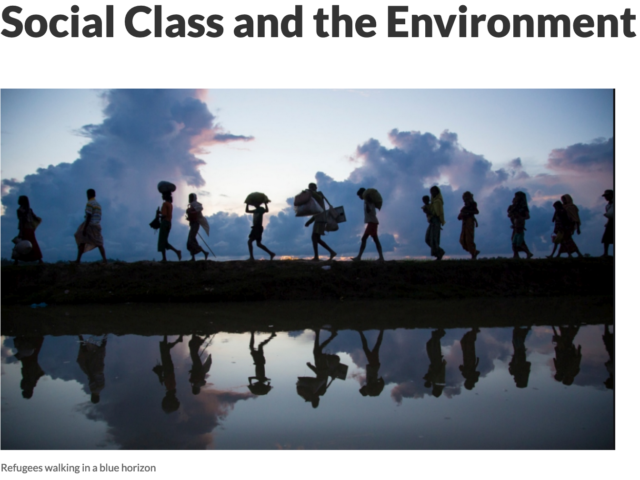
Course: Social Class & the Environment (WRPR/ENVS0210), a Human Ecology cognate in ENVS and a college writing course (CW) Idea: The creation of a textbook for the course; this is the core of the course. What’s needed: Scalar: knowledge of the tool to be able to instruct students on how to use different options when more… »
Building Community through Collaborative Presentations early in the semester
(1 votes)Created by Jim Ralph • 392 views • responses
This exercise is designed to bring students to the center of learning early in the semester and to give them the experience of working with others. It also seeks to contribute to the learning goals of oral presentation and collaboration. For example, in a seminar about cities, students paired up early on to collaborate and more… »
Engagement Activities
(1 votes)Created by Jason Mittell • 509 views • responses
To promote student engagement in course materials in a mostly-asynchronous course, I developed a framework of “Weekly Engagement Activities” that provide multiple flexible opportunities for students to demonstrate their engagement. This is the language used to describe the framework: Each week, students have multiple ways to demonstrate their engagement with the course. Most of these more… »
Classroom Introductions
(1 votes)Created by Michele Dubé • 481 views • responses
Assign students to record a brief-self introduction using FlipGrid (or the Canvas media tool) for the first week of class. The instructor should also do the same. The assignment acts as an icebreaker and can help to build a sense of community in the classroom. This idea was used for the online General Chemistry Laboratory more… »
Group Formation
(1 votes)Created by Kristina Sargent • 369 views • responses
The Main Idea: There are many reasons you may want assign students to groups rather than letting them form their own group. Here I suggest one way to assign students to groups and pairs that encourages them to meet new people, but also tries to avoid common complaints and pitfalls of random group/partner assignments. I more… »
In-class Debates on Case Studies
(1 votes)Created by Sarah Stroup • 443 views • responses
Sometimes, students come into the classroom and there isn’t much difference in their views; either they don’t know the situation well or they adhere to the “conventional wisdom.” In my class on humanitarian relief, I do case studies of response (Somalia, Kosovo, Rwanda), each lasting 2 weeks. Each case study ends with an in-class debates. more… »
Mixing up Group Projects with Individual Components
(2 votes)Created by Michaela Kubacki • 1023 views • responses
Group Projects are an exciting and engaging way to both drive and assess student-learning while building community in our classrooms. However, assigning a group grade for one or more major assessments in a course can elicit anxieties on behalf of both the instructor and the students. Did every student meet the learning objectives? Did students more… »